💧 Water purifier guide
How to Choose a Water Purifier in India (2026 Buying Guide)
Step 1: Test your water first
Almost every bad purifier purchase in India traces back to skipping this step. A digital TDS meter costs about ₹300 and takes ten seconds to use, and the number it gives you determines which technology you need, how much you should spend, and what membrane rating to insist on.
Test at different times of year if you can. Supply that blends municipal and borewell water — normal in Bengaluru, Gurugram, Pune, Hyderabad and Chennai — can swing 300-500 ppm between monsoon and summer. Design for the worst reading.
If your area has any documented arsenic, fluoride or nitrate issue, also get a NABL-accredited lab test (₹1,500-3,000). A TDS meter cannot detect these, and they are exactly the contaminants that cause the most serious long-term harm.
Step 2: Choose the technology
| Your situation | Buy this | Typical spend |
|---|---|---|
| Treated municipal, under 200 ppm | Gravity UF or UV+UF | ₹1,500 - ₹8,000 |
| Municipal, 200-300 ppm | UV+UF, or RO with TDS controller | ₹8,000 - ₹16,000 |
| Municipal/blended, 300-600 ppm | RO + UV + UF + TDS controller | ₹15,000 - ₹20,000 |
| Borewell / tanker, 600-1,200 ppm | RO rated 2,000 ppm + UV + TDS controller | ₹16,000 - ₹25,000 |
| Brackish, above 1,500 ppm | RO rated 3,000 ppm, plus lab analysis | ₹25,000 - ₹35,000 |
| Any arsenic / fluoride area | RO, regardless of TDS reading | ₹16,000+ |
| Iron staining present | Iron pre-filter + RO | ₹18,000+ plus pre-treatment |
Step 3: Features that matter, and features that do not
- MATTERS — TDS controller: lets you retain minerals and adapt to seasonal input changes. Effectively mandatory on RO.
- MATTERS — Tank size: 5-6 L for two people, 7-8 L for three or four, 8-9 L for five or more, larger if your area has long water cuts.
- MATTERS — Water recovery: high-recovery designs halve reject water. Real money if you buy tankers.
- MATTERS — Tank hygiene: stainless steel or in-tank UV, particularly in humid coastal cities.
- MATTERS — Service reachability: the most under-weighted factor in the entire purchase.
- SOMETIMES — Hot water: genuinely changes your routine if you drink a lot of tea or coffee. Needs a proper child lock.
- SOMETIMES — Copper: pleasant, traditional, mild antimicrobial benefit on already-sterilised water. Buy for preference.
- MOSTLY MARKETING — Stage count: brands count sediment pads as stages. Read the actual technology list instead.
- MOSTLY MARKETING — Alkaline: raises pH, no solid clinical evidence of health benefit.
- MOSTLY MARKETING — 'e-boiling', 'zero waste RO': UV sterilisation and high-recovery RO respectively, both overstated.
Step 4: Make the service phone call
This is the step that separates people who are happy with their purifier three years later from people who are not, and it takes five minutes.
Call the brand's customer care, give them your actual pin code, and ask two questions: is there a service technician covering this area, and how many days does a filter-change request typically take? Then ask for the AMC price in writing.
If they are vague, or the answer is more than two or three days, buy a different brand. The hardware differences between mainstream purifiers are small; the service differences are enormous. This is why KENT and Aquaguard remain the default recommendation in tier-3 towns even where their specifications are not the best on paper.
Tip
Step 5: Installation day checklist
- Watch the technician measure input and output TDS, and write both numbers down. That is your baseline.
- Ask him to show you where the reject line goes, and arrange a bucket or drum if you want to reuse it.
- Confirm the TDS controller setting and what output TDS it produces. Adjust if output is below 40 ppm.
- Get the installation date, model number and serial number recorded, plus the warranty card filled in.
- Note the filter-change due dates in your phone calendar. Do not rely on the indicator light.
Frequently asked questions
Which water purifier is best for home in India?
How much should I spend on a water purifier?
How long does a water purifier last?
Still not sure which water purifier fits?
Tell us your city and situation. We will give you a straight answer — including when the honest answer is that you do not need to spend much at all.
Shortlists that follow this advice
- Best Water Purifiers for Home in India (2026)best water purifier for home
- Best RO + UV + UF Water Purifiers in India (2026)ro uv uf water purifier
- Best Water Purifiers Under ₹15,000 in India (2026)water purifier under 15000
- Best Water Purifiers Under ₹20,000 in India (2026)water purifier under 20000
- Best Water Purifiers for Apartments & Flats (2026)water purifier for apartments
Read next
Our current top water purifiers

AO Smith Z9 Green RO
AO Smith
- RO + SCMT
- 9 litres tank
- Up to 3000 ppm TDS
Premium kitchens, high-TDS or brackish supply, and households that drink a lot of tea and coffee.
View details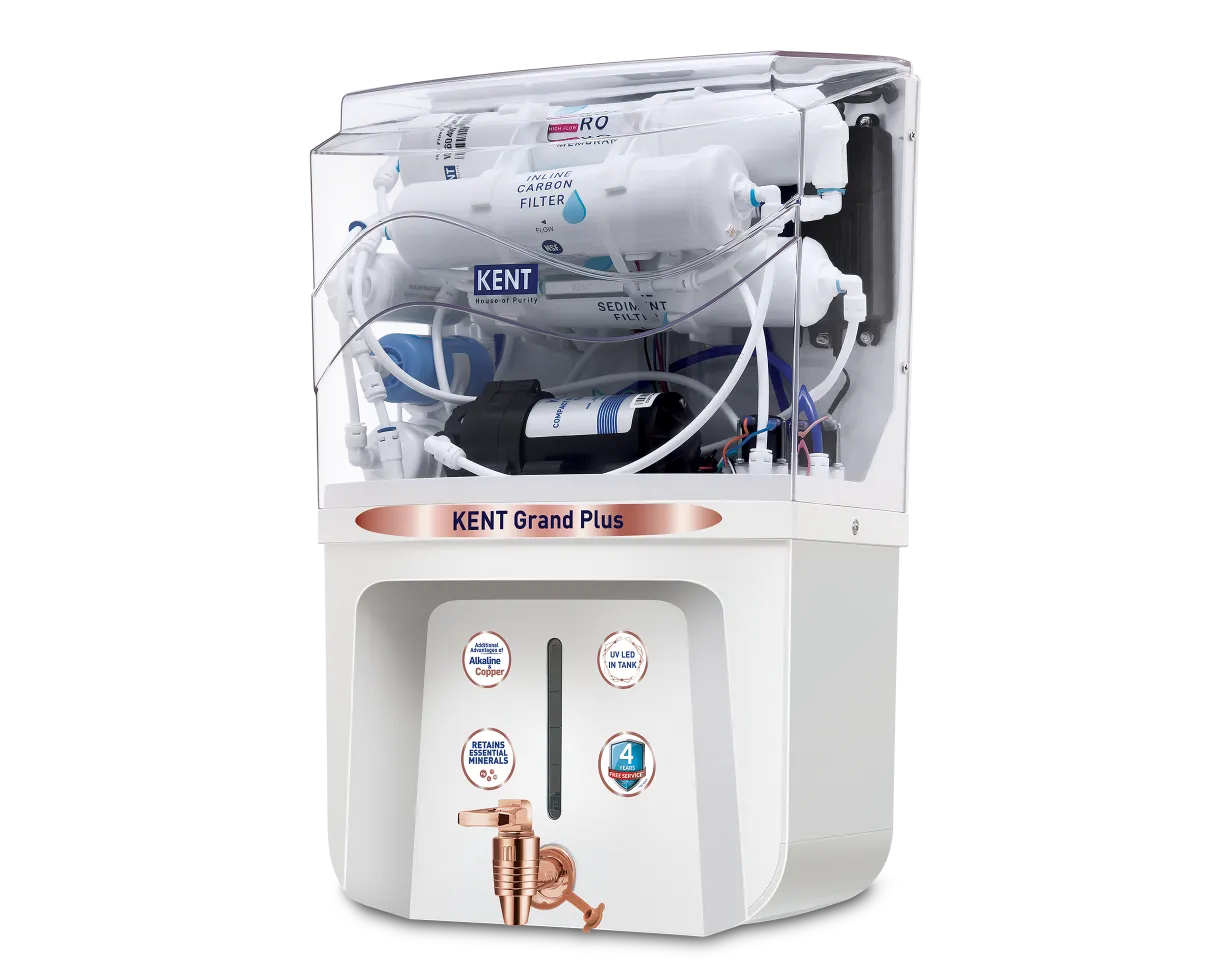
KENT Grand Plus
KENT
- RO + UV + UF + TDS Controller
- 9 litres tank
- Up to 2000 ppm TDS
Families on borewell, tanker or high-TDS municipal supply who want the safest all-round choice.
View details
LG PuriCare WW182EP
LG
- RO + Dual Protection Sterilising Care UV
- 8 litres tank
- Up to 2000 ppm TDS
Hygiene-focused buyers, humid coastal cities, and anyone who has ever opened a purifier tank and been unpleasantly surprised.
View details
Aquaguard Delight NXT
Aquaguard
- RO + UV e-boiling + UF + MTDS + Active Copper
- 6 litres tank
- Up to 2000 ppm TDS
Buyers who value service reliability and compact design over maximum tank capacity.
View details