💧 Water purifier guide
How Does an RO Water Purifier Actually Work?
Osmosis, and why this is the reverse of it
In natural osmosis, water moves across a semi-permeable membrane from the less concentrated side to the more concentrated side, diluting it. It is how plant roots draw water from soil, and it happens without any external energy.
Reverse osmosis does the opposite by applying pressure to the concentrated side, pushing water molecules through the membrane against the natural gradient. Water passes; the dissolved sodium, calcium, magnesium, nitrate, arsenic, fluoride and lead ions do not, because they are physically larger than the membrane's pores once hydrated. They leave down the reject line as concentrate.
What is actually inside the box
| Component | Job | Replacement interval |
|---|---|---|
| Sediment filter | Removes silt, rust and turbidity that would abrade the membrane | 6-9 months |
| Pre-carbon block | Removes chlorine, which destroys a polyamide RO membrane | 6-9 months |
| Booster pump | Raises inlet pressure to the 5-7 bar the membrane needs | 3-5 years |
| RO membrane | The separation itself — removes 90-98% of dissolved solids | 18-30 months |
| TDS controller | Blends a controlled amount of pre-RO water back in for taste and minerals | Adjust, not replace |
| UV lamp (if fitted) | Inactivates microbes, usually after the storage tank | 12 months |
| Post-carbon polisher | Final taste and odour polish before the tap | 9-12 months |
| Storage tank | Holds 6-10 L so purified water is available on demand | Sanitise at every service |
Important
Why it needs a pump and a drain
Indian mains pressure is typically 1-3 bar and frequently lower on upper floors. An RO membrane needs roughly 5-7 bar to work properly, which is what the booster pump provides. A purifier running on inadequate pressure produces less water, wastes more of it, and fouls its membrane faster — which is why low inlet pressure is one of the most common causes of premature membrane failure.
The drain line exists because the salts have to go somewhere. Everything the membrane rejects leaves in a concentrated stream, typically 1-3 litres for every litre purified. That ratio is a design characteristic, not a fault, though high-recovery designs have improved it considerably.
The TDS controller, and why your water tastes flat without it
An RO membrane is indiscriminate. It removes calcium and magnesium along with the arsenic, and it removes the bicarbonates that buffer water's pH. Output at 20-30 ppm tastes flat and slightly acidic, which is the source of most complaints about RO water.
A TDS controller is a small valve that lets a measured amount of pre-membrane water bypass and blend back into the output. Set sensibly, it lands the final reading at 60-100 ppm — enough mineral content to taste like water rather than nothing.
Many units ship set aggressively low so the demonstration TDS meter reads impressively at installation. If your RO water tastes empty, that is the first thing to check, and adjusting it costs nothing.
How RO units actually fail
- Chlorine damage to the membrane, from a pre-carbon block left past its interval. The symptom is output TDS climbing steadily over a few months.
- Fouling from sediment, on units fitted without an adequate sediment stage or on very turbid supply. The symptom is falling output flow.
- Scaling on hard water, where calcium precipitates on the membrane surface. This is why very hard supply benefits from softening ahead of the RO rather than a bigger membrane.
- Pump failure, usually after three to five years, and usually preceded by louder or more frequent cycling.
- Tank bladder failure, which shows up as reduced usable capacity and a purifier that runs almost continuously.
- Biofilm in the storage tank on units that are serviced late — the reason a UF stage or post-tank UV is worth having.
Frequently asked questions
How does reverse osmosis work in simple terms?
How many stages does an RO purifier need?
Why does an RO purifier waste water?
How often should the RO membrane be replaced?
Does an RO purifier work without electricity?
Still not sure which water purifier fits?
Tell us your city and situation. We will give you a straight answer — including when the honest answer is that you do not need to spend much at all.
Shortlists that follow this advice
- Best RO Water Purifiers in India (2026)best ro water purifier in india
- Best RO + UV + UF Water Purifiers in India (2026)ro uv uf water purifier
- Best Water Purifiers for High TDS Water (2026)best water purifier for high tds
- Best Zero-Waste & High-Recovery RO Water Purifiers (2026)zero waste ro water purifier
Read next
Our current top water purifiers

AO Smith Z9 Green RO
AO Smith
- RO + SCMT
- 9 litres tank
- Up to 3000 ppm TDS
Premium kitchens, high-TDS or brackish supply, and households that drink a lot of tea and coffee.
View details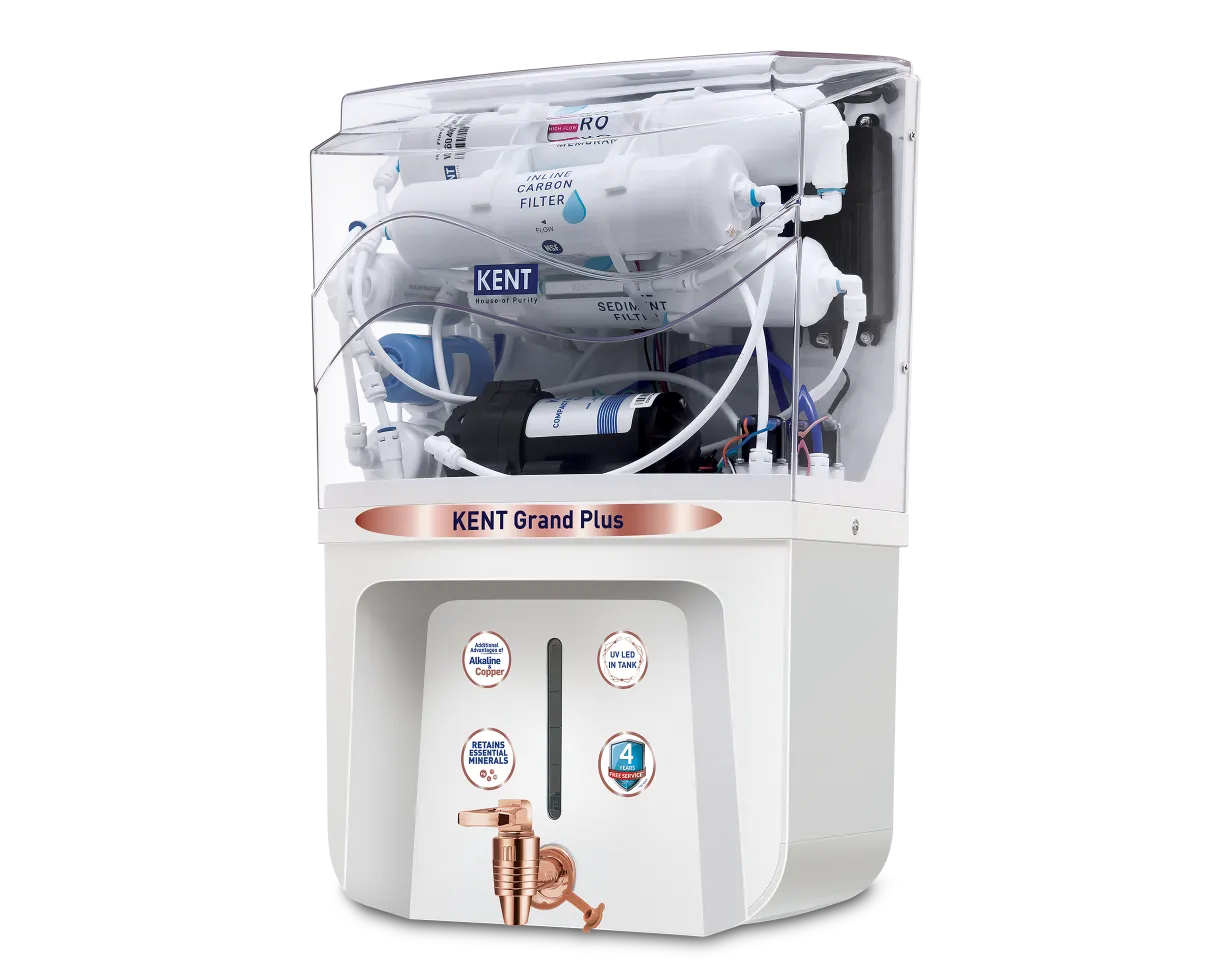
KENT Grand Plus
KENT
- RO + UV + UF + TDS Controller
- 9 litres tank
- Up to 2000 ppm TDS
Families on borewell, tanker or high-TDS municipal supply who want the safest all-round choice.
View details
LG PuriCare WW182EP
LG
- RO + Dual Protection Sterilising Care UV
- 8 litres tank
- Up to 2000 ppm TDS
Hygiene-focused buyers, humid coastal cities, and anyone who has ever opened a purifier tank and been unpleasantly surprised.
View details
Aquaguard Delight NXT
Aquaguard
- RO + UV e-boiling + UF + MTDS + Active Copper
- 6 litres tank
- Up to 2000 ppm TDS
Buyers who value service reliability and compact design over maximum tank capacity.
View details