💧 Water purifier guide
Is RO Water Safe for Health? The Evidence, Honestly
The short answer
Yes, RO water is safe to drink. The concern circulating online — that RO strips essential minerals and therefore harms you — contains a kernel of truth wrapped in a lot of exaggeration.
The kernel: RO does remove calcium and magnesium along with everything else dissolved, and the WHO has published on the drawbacks of consuming fully demineralised water. The exaggeration: for most people eating a normal diet, drinking water is a minor source of these minerals compared with food, so the practical impact of RO water at a sensible TDS is small.
And the framing usually gets the risk comparison backwards. If your supply is 900 ppm borewell water in a fluoride belt, the health question is not whether you might get slightly less magnesium — it is whether you are drinking fluoride every day for twenty years.
What the mineral argument gets right and wrong
- Right: RO removes 90-98% of dissolved minerals along with contaminants. It is not selective.
- Right: the WHO has documented that long-term consumption of fully demineralised water has drawbacks, including on taste and on mineral intake at the margin.
- Wrong: that water is a major source of dietary calcium and magnesium. For most diets it is a modest contributor; dairy, pulses, nuts and leafy vegetables dominate.
- Wrong: that this makes RO unsafe. It makes running RO at its lowest possible TDS unwise, which is a settings problem with a simple fix.
- The fix: use the TDS controller to keep output at 60-120 ppm rather than 20 ppm. Every purifier we recommend has one.
Note
The risks with RO that people should actually worry about
- Neglected filter changes. A membrane months past its life stops rejecting properly, and an exhausted carbon filter lets chlorine through to oxidise the membrane. This is by far the most common real failure.
- Tank biofilm. Purified water sitting in a sealed plastic tank at Indian room temperature grows a biofilm you cannot scrub out. This is why in-tank UV and stainless-steel tanks are genuinely worthwhile in humid cities.
- Water wastage. Conventional RO rejects 2-3 litres per litre purified. Choose a high-recovery model and plumb the reject line into a bucket for mopping and flushing.
- Buying RO when you did not need it. On treated supply below 200 ppm, RO wastes money and water to solve a problem you do not have.
So should you use RO?
Use RO if your TDS is above 300 ppm, if you are on borewell, tanker or unknown supply, or if there is any documented arsenic, fluoride, nitrate or heavy-metal issue in your area. In those situations RO is not a lifestyle choice, it is the appropriate protection, and the mineral question is a rounding error against the risk it removes.
Do not use RO if your supply is treated municipal water below 200 ppm with no contaminant concerns. A UV+UF purifier is the better answer: cheaper, no water wasted, minerals retained.
Either way, set your TDS controller for 60-120 ppm output and change your filters on schedule. Those two habits matter more than the technology debate.
Frequently asked questions
Is RO water bad for health in the long term?
Does RO water cause vitamin or mineral deficiency?
Which is healthier, RO water or normal tap water?
Still not sure which water purifier fits?
Tell us your city and situation. We will give you a straight answer — including when the honest answer is that you do not need to spend much at all.
Shortlists that follow this advice
Read next
Our current top water purifiers

AO Smith Z9 Green RO
AO Smith
- RO + SCMT
- 9 litres tank
- Up to 3000 ppm TDS
Premium kitchens, high-TDS or brackish supply, and households that drink a lot of tea and coffee.
View details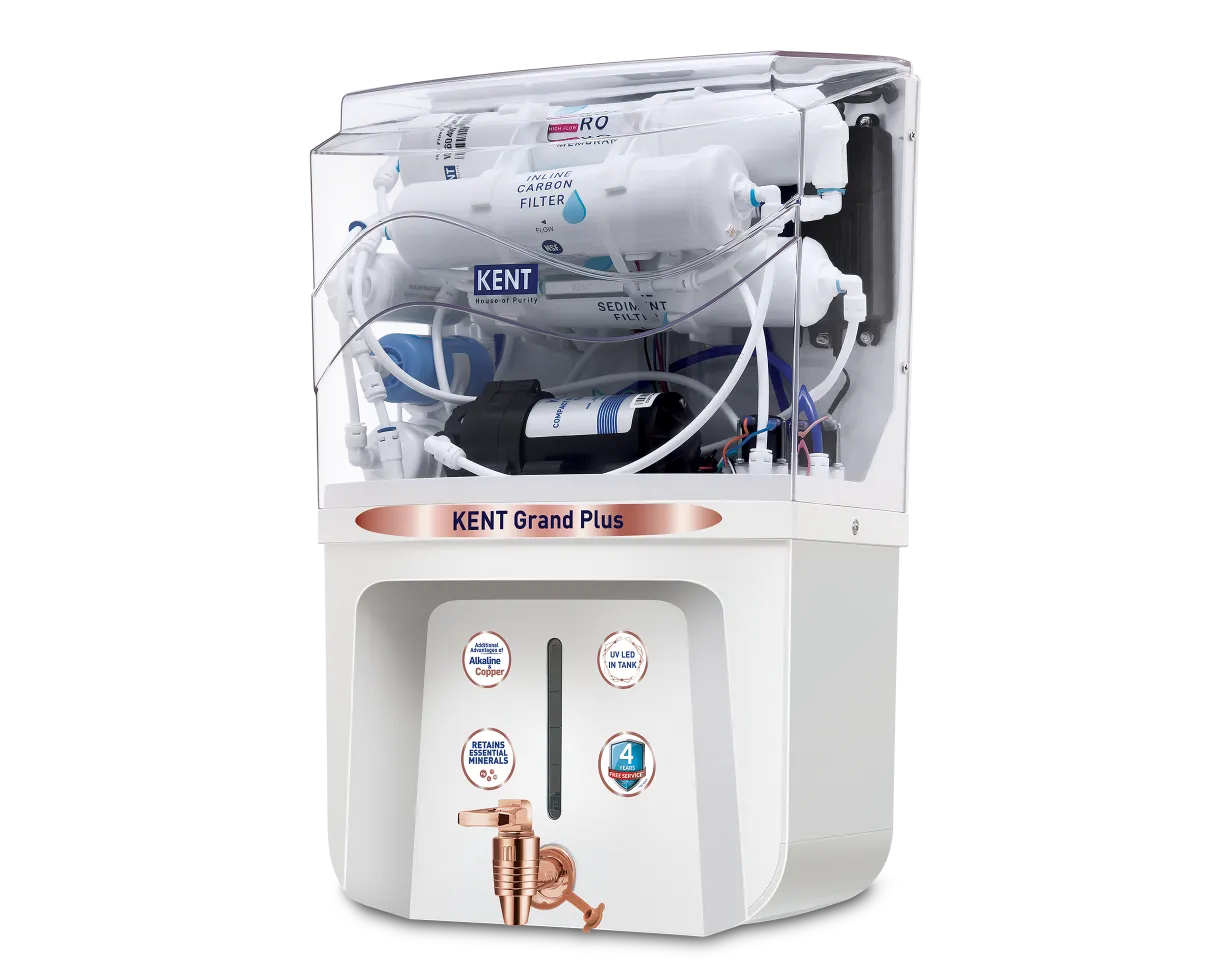
KENT Grand Plus
KENT
- RO + UV + UF + TDS Controller
- 9 litres tank
- Up to 2000 ppm TDS
Families on borewell, tanker or high-TDS municipal supply who want the safest all-round choice.
View details
LG PuriCare WW182EP
LG
- RO + Dual Protection Sterilising Care UV
- 8 litres tank
- Up to 2000 ppm TDS
Hygiene-focused buyers, humid coastal cities, and anyone who has ever opened a purifier tank and been unpleasantly surprised.
View details
Aquaguard Delight NXT
Aquaguard
- RO + UV e-boiling + UF + MTDS + Active Copper
- 6 litres tank
- Up to 2000 ppm TDS
Buyers who value service reliability and compact design over maximum tank capacity.
View details