Two numbers on every Indian refrigerator listing are close to meaningless on their own, and almost every bad purchase in this category traces back to one of them. The first is gross litres. Brands quote the total cabinet volume, which counts the freezer and the space the shelves themselves occupy — so a 260 L double door holds around 195 L of actual fresh-food space, and a 653 L side-by-side holds around 478 L. Buyers who size on the sticker are the ones who find their new fridge full within a month. Budget on roughly 75% of gross for a top-freezer double door, 72% for a triple door and 73% for a side-by-side, and every ranking on this site publishes the usable figure next to the quoted one.
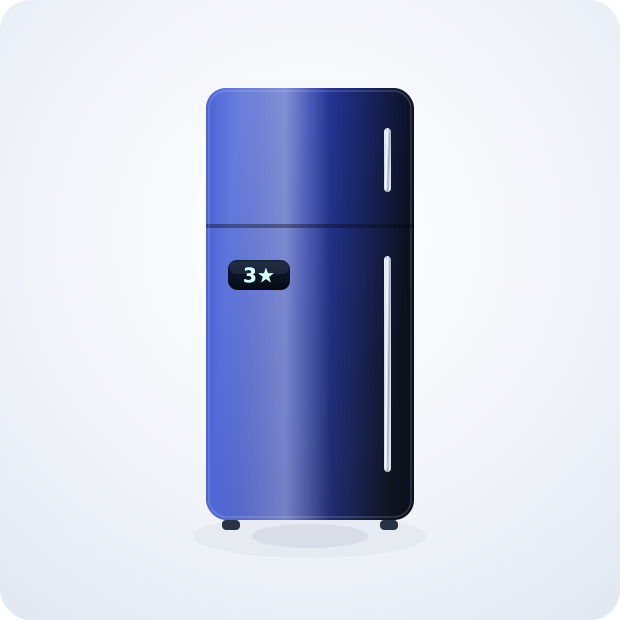
The second is the BEE star. A star rating means nothing without the label period it was issued under, because BEE re-bases the scale roughly every three years — a 5-star from the 2019 window is typically a 3-star today, and listings almost never say which window they are quoting. Compare the declared kWh/year figure instead, and check both units carry the same period. It also matters that direct-cool and frost-free are banded separately: a 3-star frost-free double door at 205 units a year is not worse than a 5-star single door at 108, it is a different class of machine that runs a circulation fan continuously and a defrost heater periodically. Compare within a format, never across.
Electricity is where a refrigerator quietly costs more than its price tag suggests, because it is the only appliance in the house that runs 8,760 hours a year. At a mid-range domestic tariff of ₹8 a unit, the gap between a 5-star single door at 108 units and a 3-star at 176 is about ₹545 a year — roughly ₹6,500 over a twelve-year life, which is a third of what the fridge cost. On large formats the numbers get bigger: a 653 L side-by-side at 341 units costs around ₹1,100 a year more to run than a 272 L double door. Every product page here converts the declared units into an annual rupee figure so the comparison is in money rather than in stars.
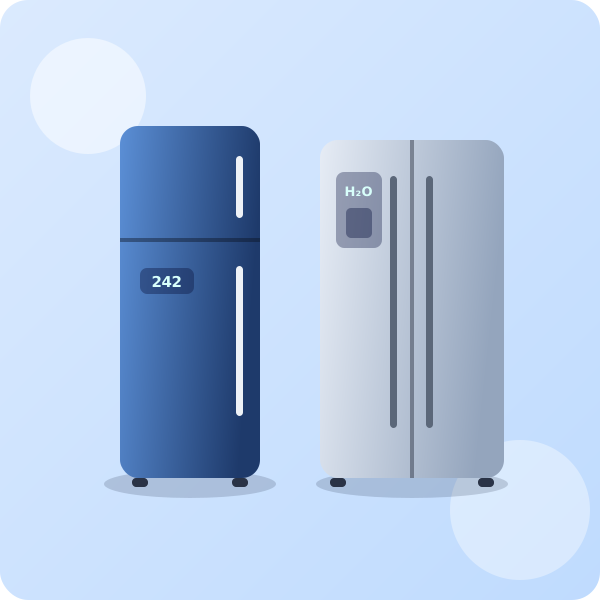
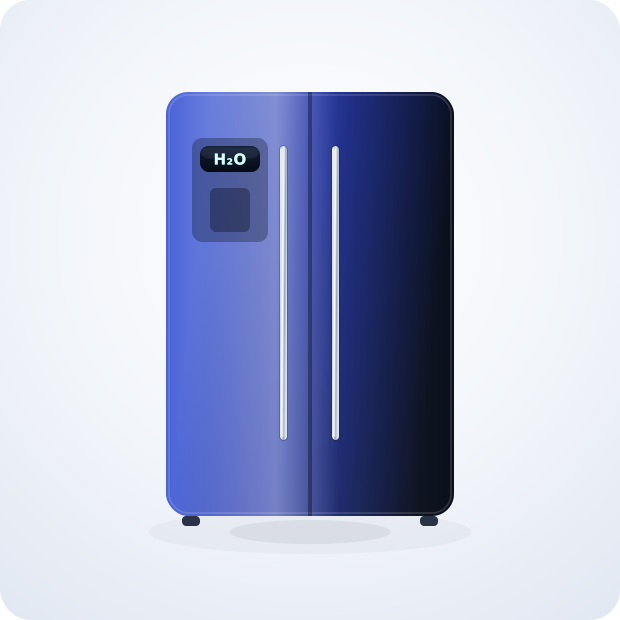
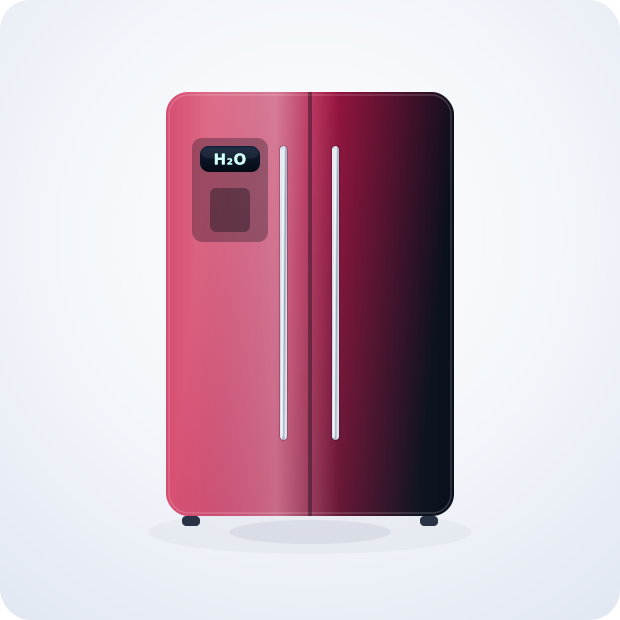
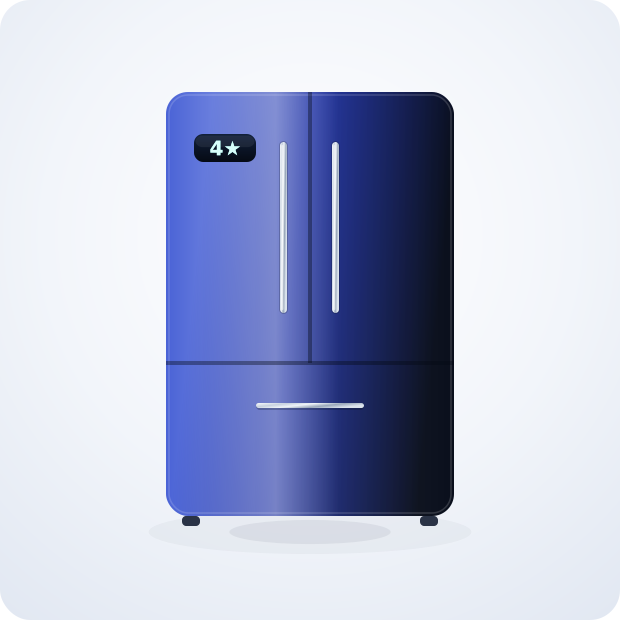
Format is the decision that comes before capacity, and it is really a question about what you store rather than how much. A double door suits almost everyone and is where the market's centre of gravity sits. A bottom freezer puts fresh food at chest height, which is better ergonomics for the compartment you open twenty times a day. A triple door adds a third climate — a humidity-controlled crisper for heavy produce storage, or a soft-freeze drawer that keeps meat sliceable without thawing. A side-by-side puts everything at eye level and adds through-door water, but each column is only about 40 cm wide, so trays and bulky produce defeat it — which is exactly the weakness a French door's full-width shelving solves.
Finally, weight service reach as heavily as specification, because this is an appliance that has to work for twelve years. Godrej and LG reach places no one else does; Whirlpool and IFB are strong in tier-2 and tier-3 cities; Bosch, Hitachi, Toshiba and Hisense build well but have thin Indian networks where parts are slow and expensive. A marginally less efficient refrigerator you can get repaired in two days beats a better one that waits a fortnight for a compressor. Where a brand's service footprint is the deciding factor in our ranking, we say so on the page.