💧 Water purifier guide
What Is the Safe TDS Level for Drinking Water in India?
What TDS actually measures
TDS stands for Total Dissolved Solids — the combined concentration of everything dissolved in your water, measured in parts per million. That includes beneficial minerals like calcium and magnesium, harmless salts, and potentially harmful dissolved substances, all counted together in one number.
This is the crucial limitation, and it is widely misunderstood: TDS is a bulk indicator, not a safety verdict. Water at 120 ppm consisting largely of dissolved arsenic would read as excellent while being genuinely dangerous. Water at 450 ppm of harmless calcium and magnesium is completely safe to drink. A TDS meter measures conductivity — it cannot distinguish good dissolved solids from bad ones.
Use TDS to decide which purification technology you need. Use a laboratory test to decide whether your water is safe.
TDS ranges and what they mean
| TDS (ppm) | Classification | Taste | What to buy |
|---|---|---|---|
| 0 - 50 | Very low / demineralised | Flat, insipid | Too low — add minerals back via TDS controller |
| 50 - 150 | Ideal | Clean and full | This is the target output range |
| 150 - 300 | Good | Pleasant | UV + UF is sufficient |
| 300 - 500 | Acceptable (BIS limit 500) | Noticeable minerality | RO recommended |
| 500 - 1,000 | High | Hard, slightly brackish | RO required |
| 1,000 - 2,000 | Very high | Brackish, unpleasant | RO rated to 2,000 ppm input |
| Above 2,000 | Brackish | Salty, hard to drink | RO rated to 3,000 ppm, plus lab analysis |
Why zero TDS is the wrong target
Some purifier marketing implies lower TDS is always better, and some buyers proudly report 15 ppm output. That is not the win it appears to be.
Demineralised water lacks calcium and magnesium, which contribute a small but real part of dietary mineral intake, and the World Health Organization has published on the drawbacks of drinking demineralised water. It also tastes flat, which has a practical consequence: people drink less of it, and mild chronic under-hydration is a bigger everyday problem than 60 ppm of dissolved calcium ever was.
This is exactly what a TDS controller is for. Set it so your output lands around 60-120 ppm rather than as low as the membrane can achieve.
Tip
How to measure your TDS properly
- Buy a digital TDS meter — around ₹300 online. Any reputable brand is adequate for domestic use.
- Fill a clean glass with tap water, let it stand for a minute, and dip the meter to the marked depth.
- Test at the same tap at different times of year. Seasonal swings of 300-500 ppm are entirely normal where supply blends municipal and borewell sources.
- Test your purifier output as well, and log both. That log is how you detect a failing membrane months before anything visibly goes wrong.
- For anything beyond TDS — arsenic, fluoride, nitrate, iron, bacteria — you need a NABL-accredited laboratory test, typically ₹1,500-3,000.
Frequently asked questions
What is the ideal TDS level for drinking water in India?
Is 0 TDS water safe to drink?
Does high TDS mean my water is unsafe?
What TDS is too high for a water purifier?
Still not sure which water purifier fits?
Tell us your city and situation. We will give you a straight answer — including when the honest answer is that you do not need to spend much at all.
Shortlists that follow this advice
- Best Water Purifiers for High TDS Water (2026)best water purifier for high tds
- Best Water Purifiers for TDS Above 1000 ppm (2026)best water purifier for tds above 1000
- Best Water Purifiers with TDS Controller (2026)tds controller water purifier
- Best Water Purifiers for Borewell Water (2026)best water purifier for borewell water
Read next
Our current top water purifiers

AO Smith Z9 Green RO
AO Smith
- RO + SCMT
- 9 litres tank
- Up to 3000 ppm TDS
Premium kitchens, high-TDS or brackish supply, and households that drink a lot of tea and coffee.
View details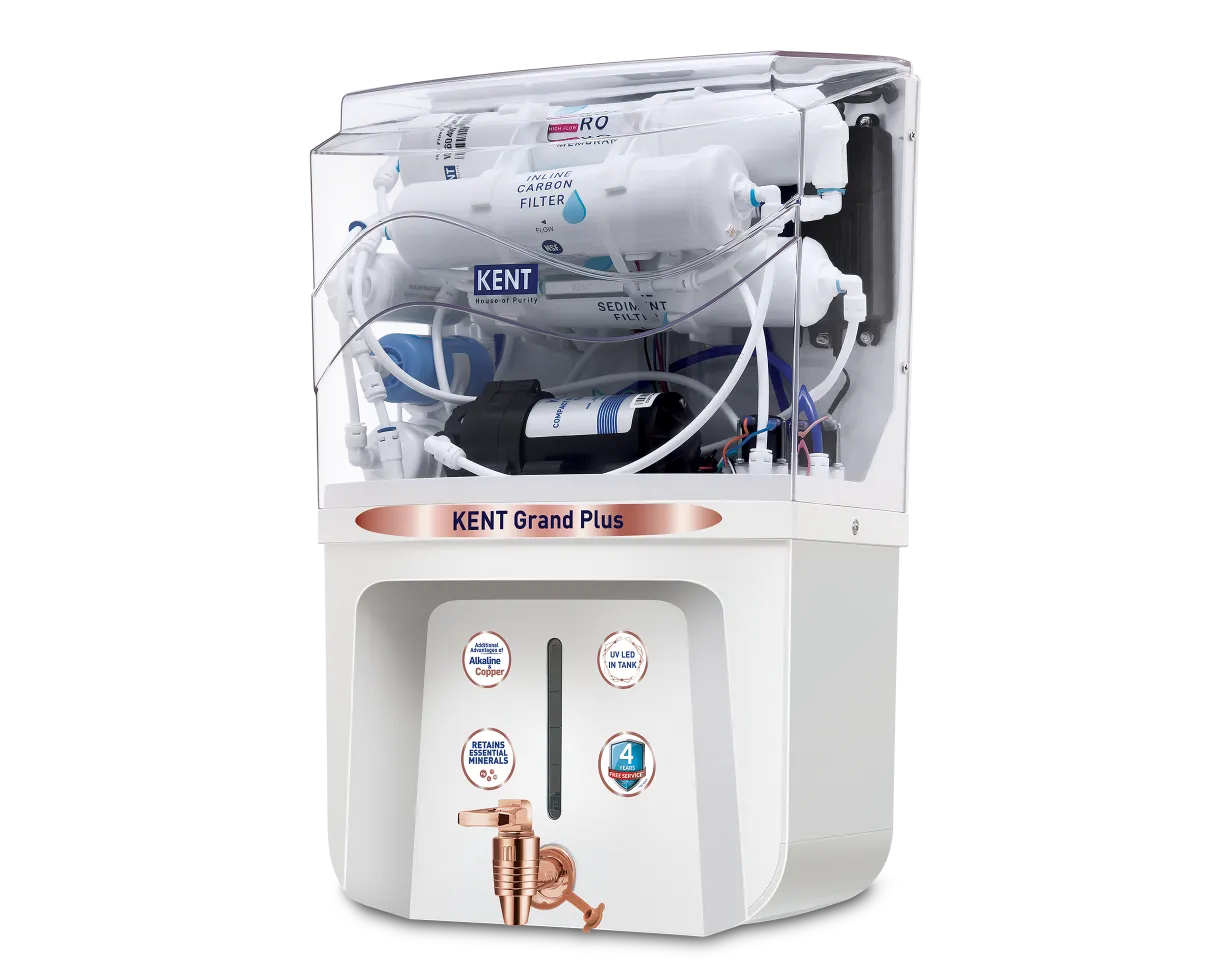
KENT Grand Plus
KENT
- RO + UV + UF + TDS Controller
- 9 litres tank
- Up to 2000 ppm TDS
Families on borewell, tanker or high-TDS municipal supply who want the safest all-round choice.
View details
LG PuriCare WW182EP
LG
- RO + Dual Protection Sterilising Care UV
- 8 litres tank
- Up to 2000 ppm TDS
Hygiene-focused buyers, humid coastal cities, and anyone who has ever opened a purifier tank and been unpleasantly surprised.
View details
Aquaguard Delight NXT
Aquaguard
- RO + UV e-boiling + UF + MTDS + Active Copper
- 6 litres tank
- Up to 2000 ppm TDS
Buyers who value service reliability and compact design over maximum tank capacity.
View details