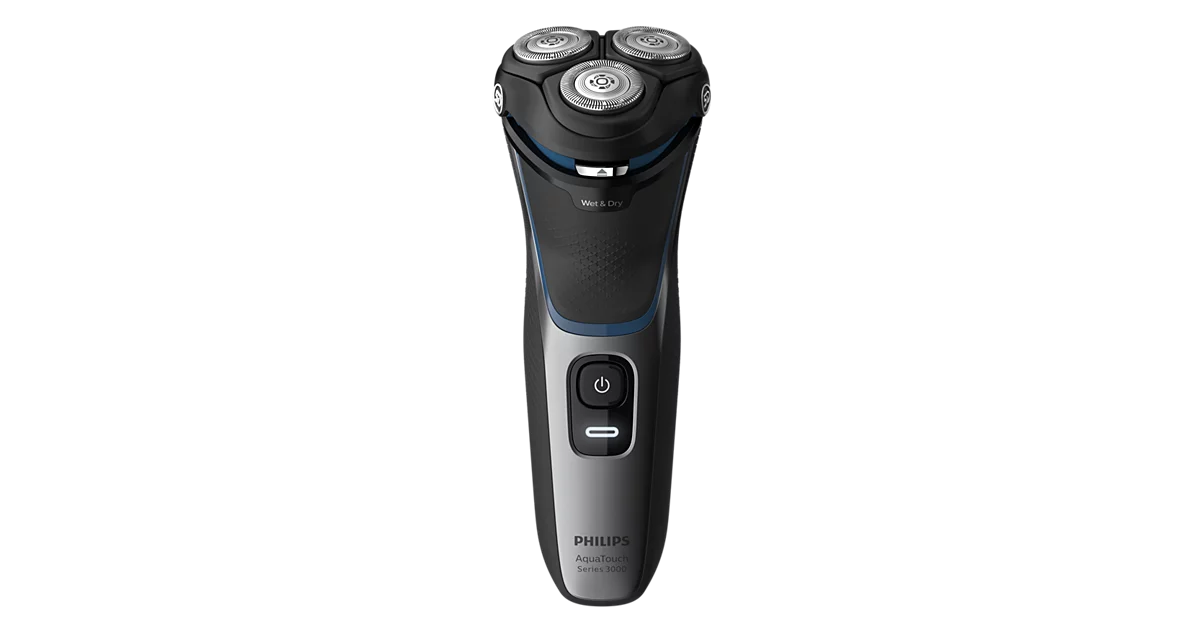
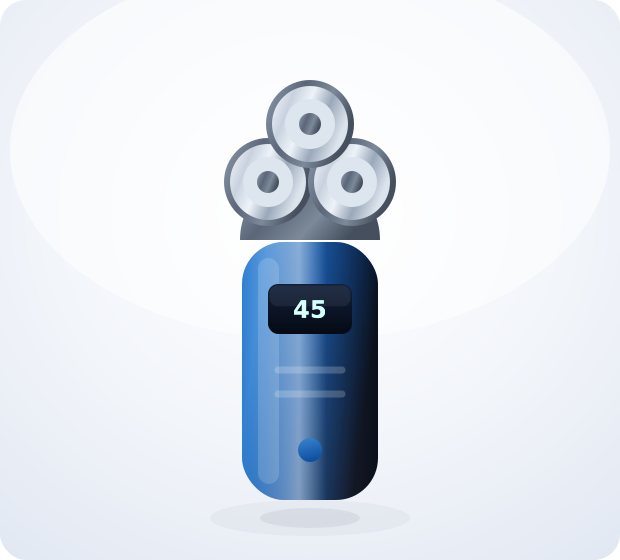
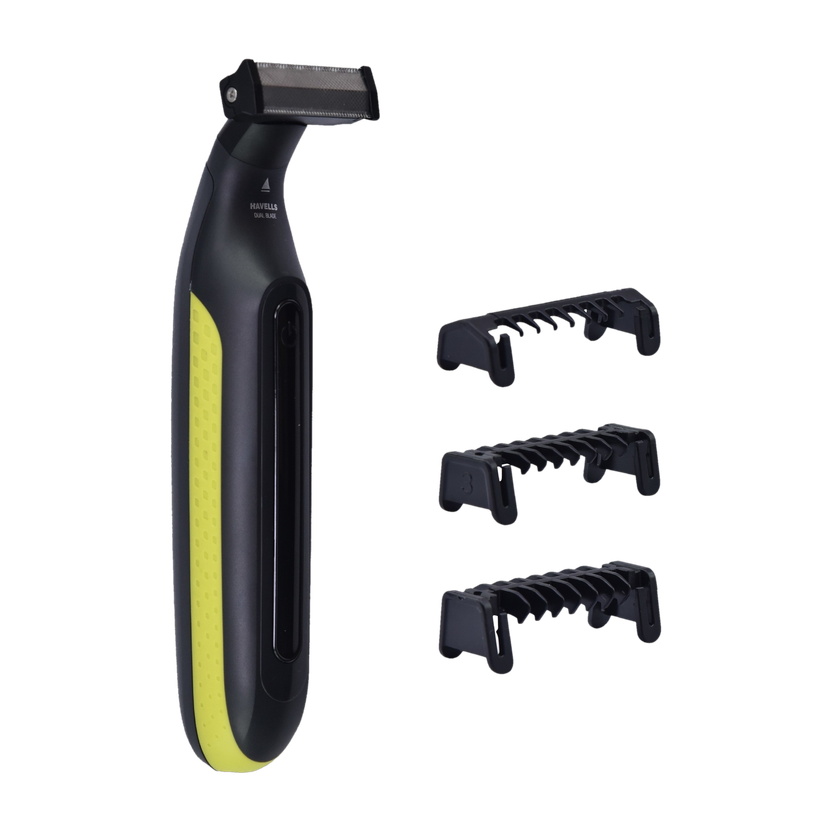
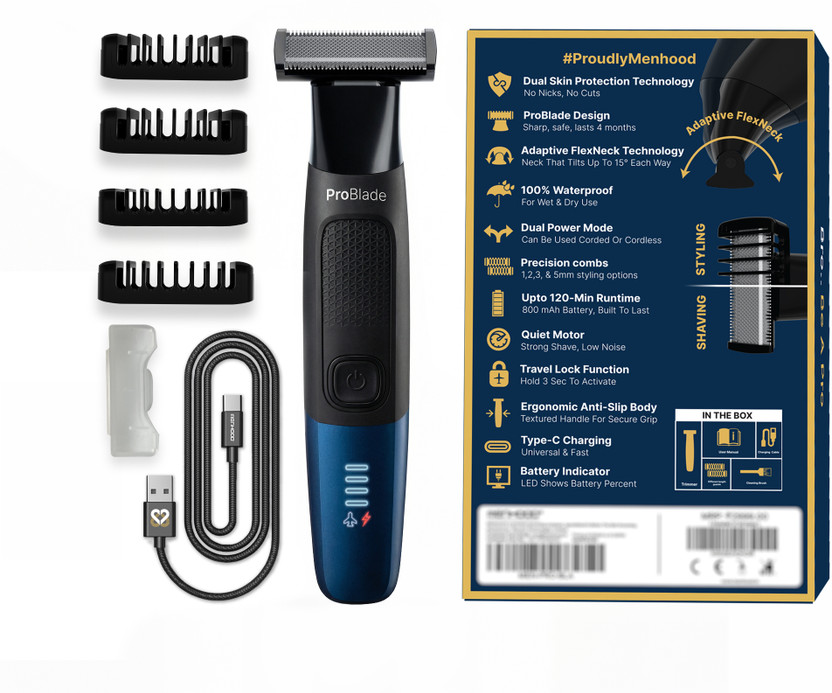
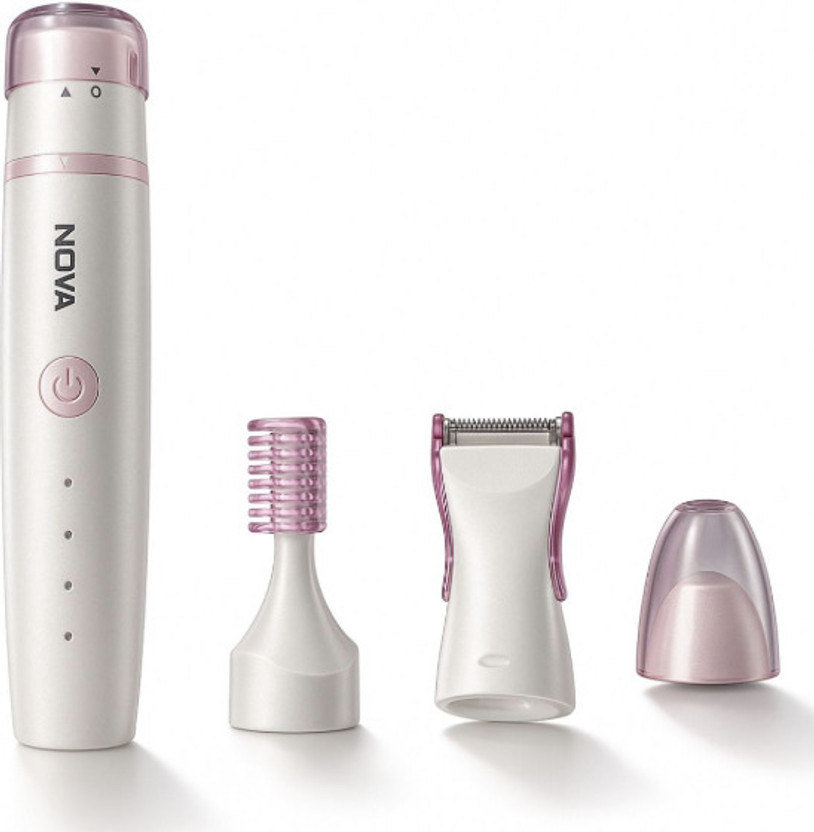
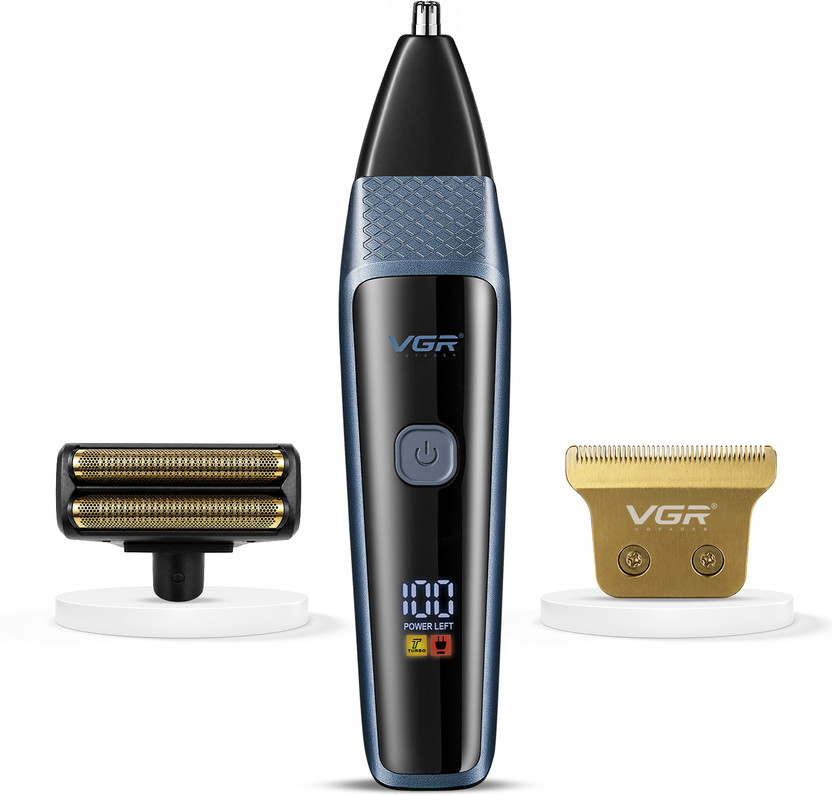
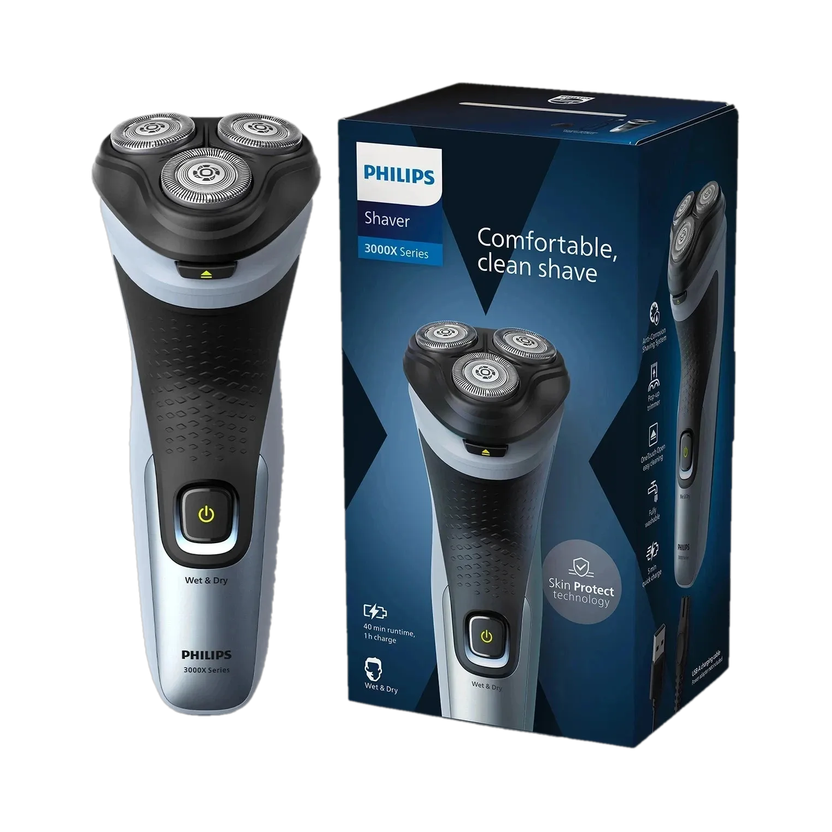
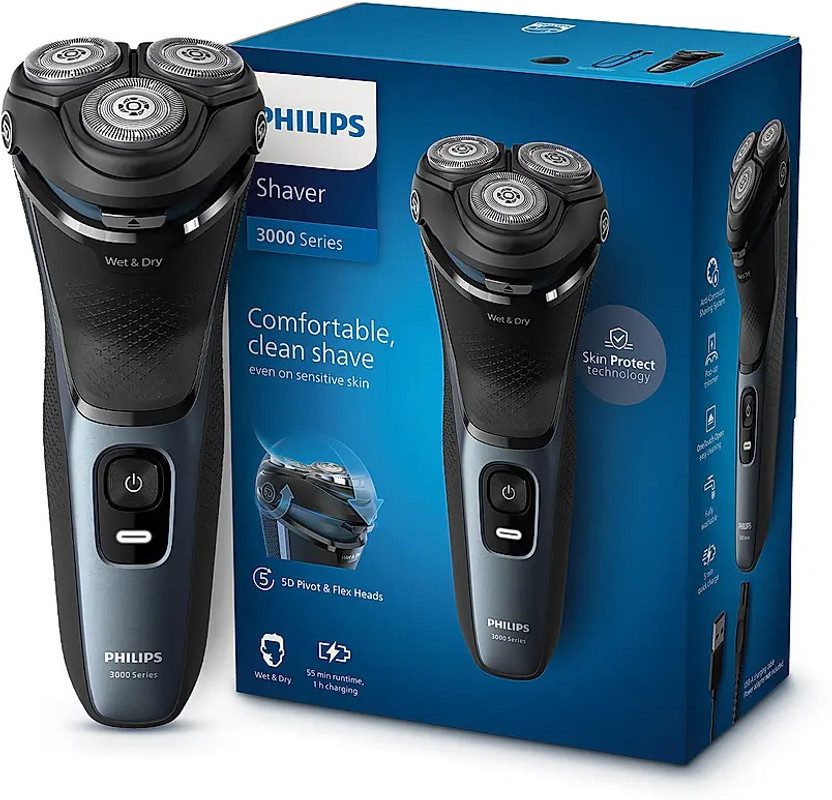
The real decision in electric shaving is foil versus rotary, and it is decided by your face rather than your budget. Foil shavers — Braun and Panasonic — hold a thin perforated screen over oscillating blades, cutting hair flush at the skin surface. They shave closest on flat planes and are gentler on sensitive skin, because nothing twists or lifts the hair. Rotary shavers — Philips and Havells — use spinning circular cutters under flexing heads that follow curves, which makes them better on a strongly angular jaw, on a neck with swirling growth, and on a scalp.
The second decision is Indian-specific and matters more than most reviews admit. Coarse, dense, fast-growing beard hair is common here, and it is exactly the load that makes a slow shaver drag, tug and irritate. Motor speed is the specification that addresses it: Panasonic's linear drive runs at roughly 14,000 cycles per minute against Braun's approximately 10,000, and the difference on a heavy beard is measured in passes rather than marketing adjectives.
Finally, budget the consumables before you buy, because this is where electric shaving hides its cost. Foil cassettes and rotary head sets are wear parts, not permanent ones — anywhere from ₹700 to ₹6,000 depending on the machine, due every 18 months to two years. A three-year-old shaver running on its original heads shaves worse than a new budget model, and most owners blame the machine rather than the blades.