AO Smith Z9 Green RO
AO Smith
- RO + SCMT
- 9 litres tank
- Up to 3000 ppm TDS
Premium kitchens, high-TDS or brackish supply, and households that drink a lot of tea and coffee.
View details💧 Water technology · Head to head
6 min read · Updated
A UV-C lamp inactivates bacteria, viruses and cysts as water flows past. Needs power and clear water.
A hollow-fibre membrane physically removes bacteria, cysts and sediment on tap pressure alone.
| UV | UF | |
|---|---|---|
| Mechanism | UV-C light damages microbial DNA | Physical exclusion by 0.01-0.1 micron pores |
| Bacteria | Inactivated | Removed |
| Viruses | Inactivated — UV's strongest suit | Partially removed; many viruses are smaller than the pores |
| Cysts (Giardia, Crypto) | Effective at correct dose | Removed — physically far too large to pass |
| Sediment and turbidity | Not removed, and it blocks the lamp | Removed |
| Dissolved solids / TDS | No | No |
| Needs electricity | Yes | No |
| Works in a power cut | No | Yes |
| Consumable | Lamp, ~₹800, yearly | Cartridge, ~₹600-1,200, 6-12 months |
| Fails silently? | Yes — a degraded lamp still glows | No — a clogged membrane slows the flow visibly |
This is the distinction that matters and it is rarely explained at the point of sale. UV does not filter anything. Every microorganism that entered the chamber leaves it, still in your glass, simply unable to reproduce. For drinking-water safety that is sufficient — an inactivated bacterium cannot colonise your gut. It is, understandably, not what most people picture when they are told water has been 'purified'.
UF is the opposite: a physical barrier that leaves the microbes on the upstream face of the membrane, where they are flushed away when the cartridge is backwashed or replaced. Nothing leaves the membrane except water and whatever is dissolved in it.
A UV lamp's output decays long before it stops glowing. A typical low-pressure mercury lamp loses meaningful germicidal intensity after about 8,000-9,000 hours — roughly a year of continuous operation — while still emitting visible light, so the purifier looks as if it is working.
Better purifiers address this with a UV sensor or a lamp-hours alarm that cuts the outlet. Cheaper ones do not, which is why the single most important habit with a UV purifier is replacing the lamp annually whether or not it has failed. UF gives you no such trap: as the membrane loads up, the flow rate drops, and you notice.
Tip
The two technologies cover each other's gaps almost exactly. UF removes the sediment that would otherwise shadow the UV lamp, and removes bacteria and cysts outright. UV handles the viruses that slip through UF's pores. Neither wastes water, neither strips minerals, and the combined running cost is still well under an RO unit's.
For a household on treated municipal supply below about 200 ppm, a well-built UV+UF purifier at ₹7,000-12,000 is the technically correct purchase, and the ₹18,000 RO+UV unit the salesperson would rather sell is over-specification.
Tell us your city and TDS reading and we will tell you which technology is actually required — including when the honest answer is the cheaper one.
AO Smith
Premium kitchens, high-TDS or brackish supply, and households that drink a lot of tea and coffee.
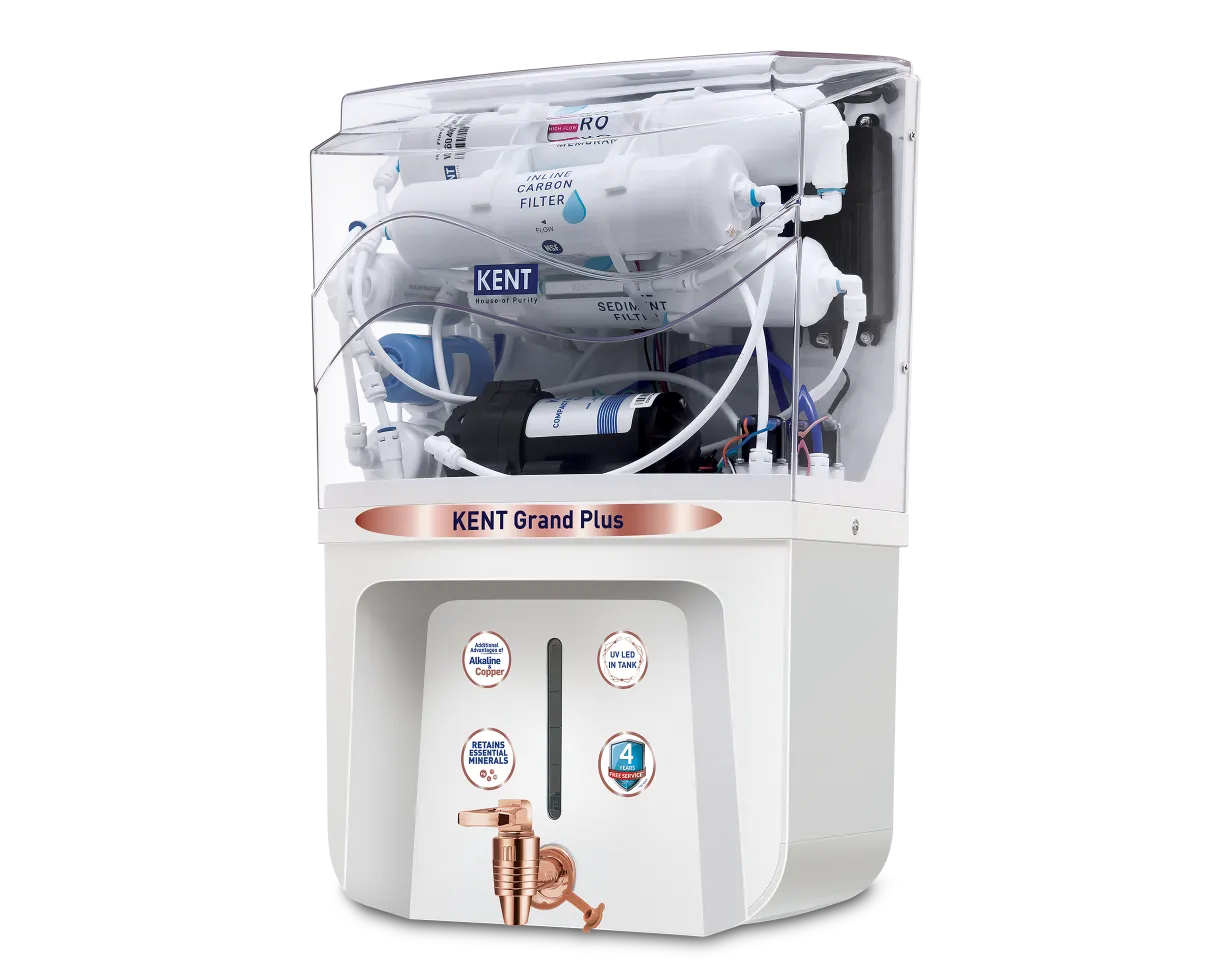
View detailsKENT
Families on borewell, tanker or high-TDS municipal supply who want the safest all-round choice.
View detailsLG
Hygiene-focused buyers, humid coastal cities, and anyone who has ever opened a purifier tank and been unpleasantly surprised.
View detailsAquaguard
Buyers who value service reliability and compact design over maximum tank capacity.
View detailsFree consultation · Pan-India
Tell us your city, your water source and your budget. For homes we will recommend the right technology — including telling you when a ₹3,000 purifier is genuinely enough. For offices, societies and factories, our team will size a system against your water report and send a specification-backed quotation.
Or email betterworkindia@gmail.com — attach a water analysis report and we can quote faster.
Homes
Right-sized recommendation for your TDS, not the most expensive unit
Offices & societies
25 LPH to 2,000+ LPH, sized on headcount and feed water
Industry
Pharma, food, textile, boiler feed — engineered to your specification
Service & AMC
Installation, repair and AMC with written response times