💧 Water purifier guide
How to Check Your Water's TDS — and What the Reading Means
What you need and what it costs
| Tool | Cost | What it tells you |
|---|---|---|
| Digital TDS meter | ₹250-500 | Total dissolved solids in ppm. The basic technology decision |
| pH meter or strips | ₹150-600 | Acidity/alkalinity. Useful after RO, mostly for taste |
| Hardness test strips | ₹200-400 | Calcium and magnesium — decides whether you need softening |
| Home chemical test kit | ₹500-1,500 | Indicative chlorine, nitrate, iron. Screening, not diagnosis |
| NABL lab test | ₹800-2,500 | The real answer: metals, arsenic, fluoride, nitrate, bacteria |
Tip
Measuring properly, in six steps
- Step 1 — Run the tap for 30 seconds first. Water that has been standing in the pipe overnight is not representative of your supply.
- Step 2 — Collect in a clean glass, not a plastic bottle that previously held anything else. Rinse the glass with the same water twice before filling.
- Step 3 — Let it reach room temperature. TDS meters compensate for temperature, but they compensate best near 25 °C.
- Step 4 — Remove the meter's cap, switch it on, and immerse the probe to the marked line. Do not submerge the body.
- Step 5 — Stir gently and wait for the reading to stabilise, which takes 10-20 seconds. Take the stable number, not the first one shown.
- Step 6 — Rinse the probe in clean water and dry it before storing. A probe left dirty drifts, and a drifted meter is worse than no meter.
When to measure, and why once is not enough
Indian supply is seasonal in ways that matter. Municipal water blended with borewell in summer can run several hundred ppm higher than the same tap in monsoon. Tanker-fed supply varies with whichever source the tanker drew from that week. Coastal groundwater rises in salinity through the dry season.
So measure at least twice, at opposite ends of the year, and design around the higher figure. A purifier sized to the annual average leaves you unprotected exactly when the supply is worst — which is our standing editorial position and the reason our city pages design to the upper end of the local band rather than its midpoint.
Reading the number
| TDS (ppm) | Interpretation | What to buy |
|---|---|---|
| Under 50 | Very low. Flat taste, minimal mineral content | Nothing, or UV. Do not fit RO |
| 50-150 | Ideal for taste and mineral content | UV+UF |
| 150-300 | Good. Well within BIS acceptable limits | UV+UF; RO is optional and usually unnecessary |
| 300-500 | Acceptable per BIS, but taste may suffer | RO+UV with a TDS controller |
| 500-1,000 | Above the BIS acceptable limit of 500 | RO+UV, membrane rated 2,000 ppm |
| 1,000-2,000 | High. Within the BIS permissible maximum | RO+UV, high-rejection membrane, softening if hard |
| Above 2,000 | Very high. Beyond BIS permissible | RO rated to 3,000 ppm; get a lab analysis first |
What a TDS meter cannot tell you — and this is the important part
A TDS meter measures electrical conductivity and converts it to an estimate of dissolved solids. It does not identify what those solids are. Water at 180 ppm of calcium bicarbonate and water at 180 ppm containing arsenic read identically.
That matters because the contaminants with the most serious health consequences in India — arsenic in West Bengal, Bihar, Assam and eastern UP; fluoride across Rajasthan, Gujarat, Telangana and Andhra Pradesh; nitrate in intensively farmed districts; lead from old plumbing — are all invisible to a TDS meter, and all can be present at a completely ordinary reading.
It also tells you nothing about bacteria, which have no meaningful conductivity at all.
Important
Frequently asked questions
How do I check the TDS of water at home?
What is a good TDS level for drinking water?
Can a TDS meter detect contamination?
Should I measure TDS before or after the purifier?
Why does my TDS reading change between seasons?
Still not sure which water purifier fits?
Tell us your city and situation. We will give you a straight answer — including when the honest answer is that you do not need to spend much at all.
Shortlists that follow this advice
- Best Water Purifiers for High TDS Water (2026)best water purifier for high tds
- Best Water Purifiers for Borewell Water (2026)best water purifier for borewell water
- Best Water Purifiers for Tanker Water (2026)water purifier for tanker water
- Best Water Purifiers for Municipal Water Supply (2026)purifier for municipal water
Read next
Our current top water purifiers

AO Smith Z9 Green RO
AO Smith
- RO + SCMT
- 9 litres tank
- Up to 3000 ppm TDS
Premium kitchens, high-TDS or brackish supply, and households that drink a lot of tea and coffee.
View details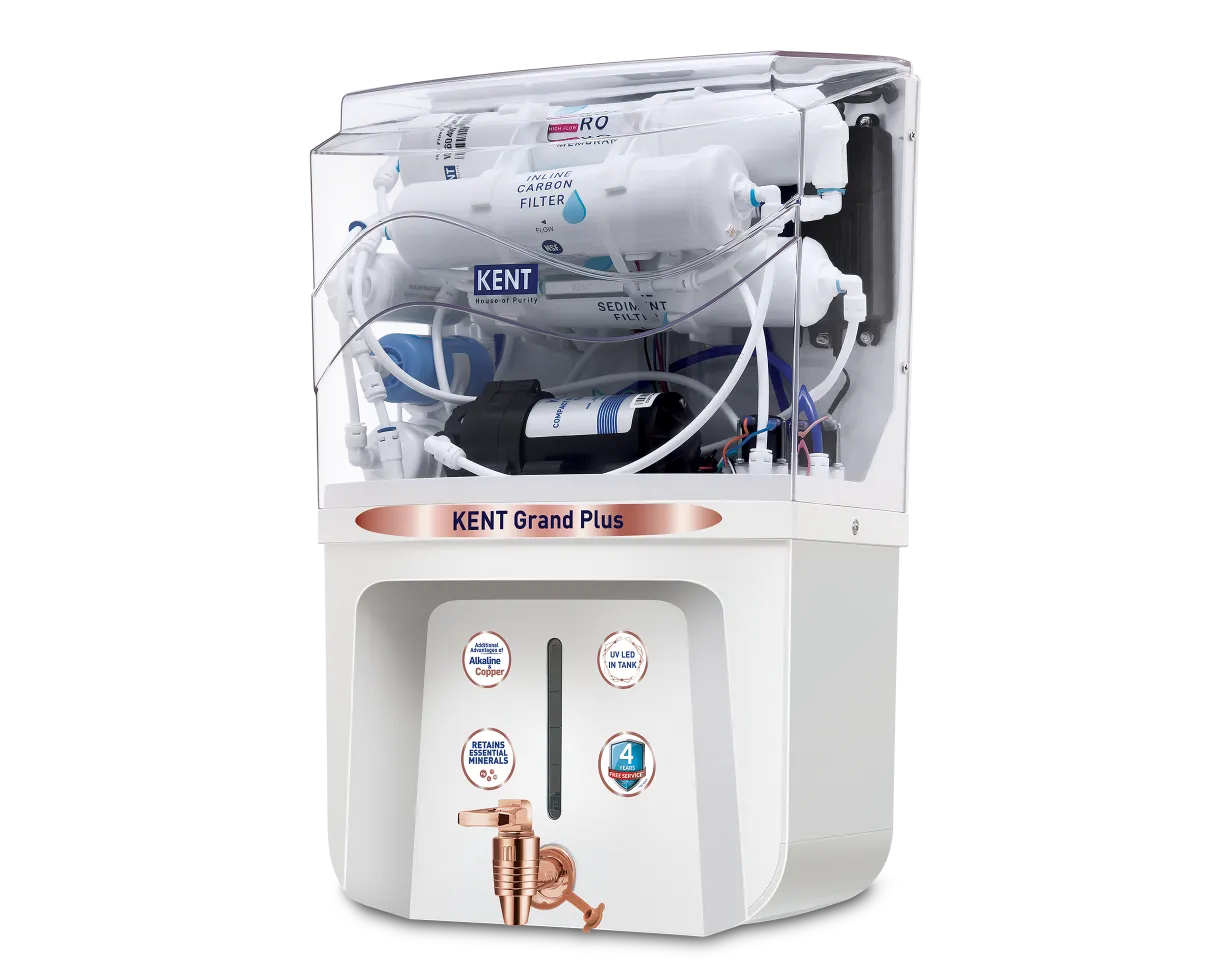
KENT Grand Plus
KENT
- RO + UV + UF + TDS Controller
- 9 litres tank
- Up to 2000 ppm TDS
Families on borewell, tanker or high-TDS municipal supply who want the safest all-round choice.
View details
LG PuriCare WW182EP
LG
- RO + Dual Protection Sterilising Care UV
- 8 litres tank
- Up to 2000 ppm TDS
Hygiene-focused buyers, humid coastal cities, and anyone who has ever opened a purifier tank and been unpleasantly surprised.
View details
Aquaguard Delight NXT
Aquaguard
- RO + UV e-boiling + UF + MTDS + Active Copper
- 6 litres tank
- Up to 2000 ppm TDS
Buyers who value service reliability and compact design over maximum tank capacity.
View details